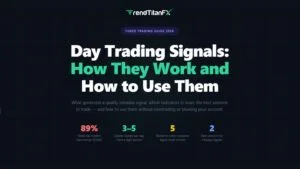
(ESMA, 2024)
after 6 months
win rate (VectorVest)
1 right fit for your life.
Most traders pick a trading style the wrong way.
They watch a YouTube video of someone scalping and making 30 trades before lunch, think it looks exciting, and try to copy it. Three weeks later they’re burned out, confused, and losing money — not because scalping is bad, but because they’re working a 9-to-5 and can’t watch screens for 6 hours a day.
Your trading style isn’t just about strategy. It’s about your lifestyle, your psychology, and how much time you can realistically commit. Get that match right and trading becomes manageable. Get it wrong and even a profitable strategy will break you.
After 5+ years of live trading across multiple styles — and having made the mistake of day trading while working a full schedule — I’ve learned this the hard way. This guide will save you the same expensive lesson.
| 📋 What you’ll learn→ The 4 main forex trading styles with honest pros, cons, and real data → Exactly which style fits your schedule, psychology, and experience level → 3 questions to find your right fit in under 2 minutes → Which TrendTitanFX signal service matches each trading style |
The 4 Forex Trading Styles at a Glance
| Style | Trade Duration | Screen Time Daily | Experience Needed | Best For |
|---|---|---|---|---|
| Scalping | Seconds–minutes | 4–6 hours | High | Full-time traders only |
| Day Trading | Minutes–hours | 2–4 hours | Intermediate–High | Dedicated part-timers |
| Swing Trading | Hours–days | 30–60 mins | Beginner–Intermediate | Part-time traders with jobs |
| Position Trading | Days–weeks | 15–30 mins | Any level | Patient, long-term focused |
Scalping — The Style That Destroys Most People Who Try It
Scalping means entering and exiting trades within seconds to minutes, targeting 5–15 pips per trade and making up profitability through high volume. Professional scalpers report 55–65% win rates according to Above The Green Line research — but those are professionals with sub-millisecond execution technology.
A 2025 VT Markets study found that 78% of retail scalpers now use automated tools just to compete with institutional order flow. That alone tells you how difficult manual scalping has become for retail traders.
It looks incredible on social media. Fast entries, quick profits, constant action. Here’s what social media doesn’t show: spreads consume 20–30% of your profit target on every single trade. One phone call at the wrong moment and a 5-pip winner becomes a 30-pip loser. The psychological demand of making split-second decisions for 4–6 hours straight is genuinely exhausting.
| ⚠️ WarningScalping on a small account with wide spreads is one of the fastest ways to lose money in forex. If your broker charges 1.5+ pips on EURUSD, your profit target on every scalp needs to account for that cost before you’ve made a single penny. |
| Scalping is right for you if | Scalping is wrong for you if |
|---|---|
| You can dedicate 4–6 uninterrupted hours daily | You have a job, family, or any other commitment |
| You thrive under pressure and fast decision-making | You’re still learning price action basics |
| You have a fast execution setup and tight spreads | You’re prone to revenge trading or emotional decisions |
| You have 2+ years of profitable live trading experience | Your account is under $5,000 |
Day Trading — The Most Popular Style, and Why It’s Harder Than It Looks
Day trading means opening and closing all positions within the same trading day — no overnight holds, everything flat before the market closes. According to ESMA data from 2024, 89% of retail day traders using CFDs lost money over a 12-month period. Quantified Strategies data shows only 13% of day traders are profitable after 6 months — and less than 1% over 5 years.
The appeal is obvious: daily results, no overnight risk, active engagement. The challenge is it requires 2–4 hours of focused screen time around the London session (8am–12pm GMT) or New York session (1pm–5pm GMT). Trading outside these windows significantly increases outcome randomness.
Research conducted with 80 individual day traders showed strong evidence of psychological biases worsening performance — particularly overtrading after losses and sizing up when behind target. Both are discipline failures, not strategy failures.
| Day trading is right for you if | Day trading is wrong for you if |
|---|---|
| You can be at screens during London or NY session consistently | Your schedule means you can only check the market occasionally |
| You want daily feedback on your performance | You work shifts or have unpredictable availability |
| You’re comfortable with 1–4 hour trade durations | You’re brand new — intraday noise is very hard to read |
| You’ve spent time learning market structure already | You’re trading a small account under $1,000 |
Swing Trading — The Style That Actually Works for Most People
Swing trading holds positions from a few hours to several days, targeting larger moves of 50–200+ pips from the 4H or daily chart. According to VectorVest data, experienced swing traders report 35–50% win rates with individual trade returns of 12–45%. Forbes data indicates a swing trader earning 2–3% per successful trade, with five winning trades per month, can achieve 10–15% monthly returns.
This is the most realistic style for most retail traders — and the most underrated. It fits real life. You don’t need to be glued to screens. You check the charts in the morning, identify setups, set your entry, stop loss, and take profit, and let the trade run. You check again in the evening. That’s workable alongside a job, a family, or any other life commitment.
Bank of England research from 2024 indicates forex swing positions average 5.7 days holding time. That’s enough time to think, plan, and react calmly — not in seconds under pressure.
| 💡 PRO TIP Swing trading pairs perfectly with structured signals. The TrendTitanFX Swing VIP channel is built specifically for higher-timeframe setups on forex, gold, and indices — with entry, stop loss, and take profit on every alert. You get the setup, apply your own risk rules, and let it run. That’s the swing workflow. |
| Swing trading is right for you if | Swing trading is wrong for you if |
|---|---|
| You have a job and can’t watch screens all day | You can’t hold a trade open for 2–3 days psychologically |
| You prefer fewer, higher-quality setups | You feel compelled to constantly check and adjust positions |
| You’re beginner to intermediate level | You need daily wins to stay motivated |
| You trade with a defined stop loss every time | You trade without defined exits |
Position Trading — The Long Game Most Beginners Ignore
Position trading holds trades for days to weeks, targeting macro moves from the daily or weekly chart. This style requires the least screen time of all — 15–30 minutes per day — but demands something most beginners lack: genuine patience to hold through 100-pip pullbacks that are completely normal in a weekly chart setup.
Position trading requires larger stop losses to give trades room to breathe. A 100–200 pip stop on a weekly setup is normal. That means your position sizing must be very small to keep risk within 1–2% of your account — which means smaller absolute dollar returns in the short term. The trade-off is cleaner setups, less psychological pressure, and more time to think.
| Position trading is right for you if | Position trading is wrong for you if |
|---|---|
| You understand macro trends and fundamental analysis | You’re new to reading markets and chart structure |
| You have strong patience and can hold through volatility | You need regular feedback and activity to stay engaged |
| You want minimal screen time and low-frequency trading | Your account is small and wide stops risk too much |
| You trade higher timeframes (daily/weekly charts) | You’re tempted to close trades early at small profits |
Which Forex Trading Style Is Right for You? Answer These 3 Questions
Answer these three questions honestly — the answers will tell you everything you need to know.
Question 1 — How much time can you give trading each day?
Question 2 — How do you react emotionally to losses?
Question 3 — How much live trading experience do you have?
Most traders reading this should be swing trading. That’s not a consolation prize — it’s the most workable style for part-time traders, the most forgiving for developing skills, and the easiest to combine with quality signals to improve entry quality while you’re still learning.
The Signals That Match Your Trading Style
| Your Trading Style | TrendTitanFX Service | What You Get |
|---|---|---|
| Day trading / Intraday | Forex VIP Signals | 3–5 high-quality forex setups daily |
| Gold trading (any style) | Gold VIP Signals | Focused XAUUSD setups daily |
| Swing trading | Swing VIP Channel | Higher timeframe setups on forex, gold, and indices |
| Want everything | Combo VIP | Forex + Gold signals combined in one plan |
| All plans include risk management guidelines, 24/7 support, and a free trade copier for MT4/MT5.Find the right plan for your trading style and start with a free Telegram channel first.→ View All Plans → Join Free Telegram Channel |
FAQ — Forex Trading Styles
The four main forex trading styles are scalping (seconds to minutes per trade), day trading (minutes to hours, all positions closed daily), swing trading (hours to days), and position trading (days to weeks). Each suits a different lifestyle, schedule, and psychological profile.
Swing trading is most recommended for beginners. It uses higher timeframe charts where setups are clearer, gives you time to think before entering, requires less screen time, and is compatible with learning alongside a job or other commitments. Scalping and intraday trading punish inexperience quickly.
Effective day trading typically requires 2–4 focused hours per day during the London session (8am–12pm GMT) or New York session (1pm–5pm GMT). Trading outside these high-volume windows significantly reduces setup quality and increases outcome randomness.
Scalping can be profitable but is one of the hardest styles to execute consistently. Professional scalpers report 55–65% win rates but 78% of retail scalpers now use automated tools just to compete. It is not recommended for beginners, part-time traders, or accounts with wide spreads.
Swing trading in forex means holding positions from several hours to a few days, targeting moves of 50–200+ pips from the 4H or daily chart. It requires 30–60 minutes of chart time per day and is widely considered the most workable style for retail traders with jobs and other commitments.
There is no universally most profitable style — profitability depends entirely on the match between style, schedule, psychology, and risk management. VectorVest data shows experienced swing traders reporting 35–50% win rates with 12–45% per winning trade. The style you can follow consistently is always more profitable than the one you theoretically prefer but can’t execute.
Day trading closes all positions within the same session — no overnight holds. Swing trading holds positions for hours to days, targeting larger moves. Day trading requires 2–4 hours of focused screen time per session. Swing trading requires 30–60 minutes per day. According to ESMA data, 89% of retail day traders lose money vs swing trading which has a more sustainable success rate for part-time traders.